What is the Sports Industry, Really?
Nirav Muthiyan 16 September 2026 Sports Business
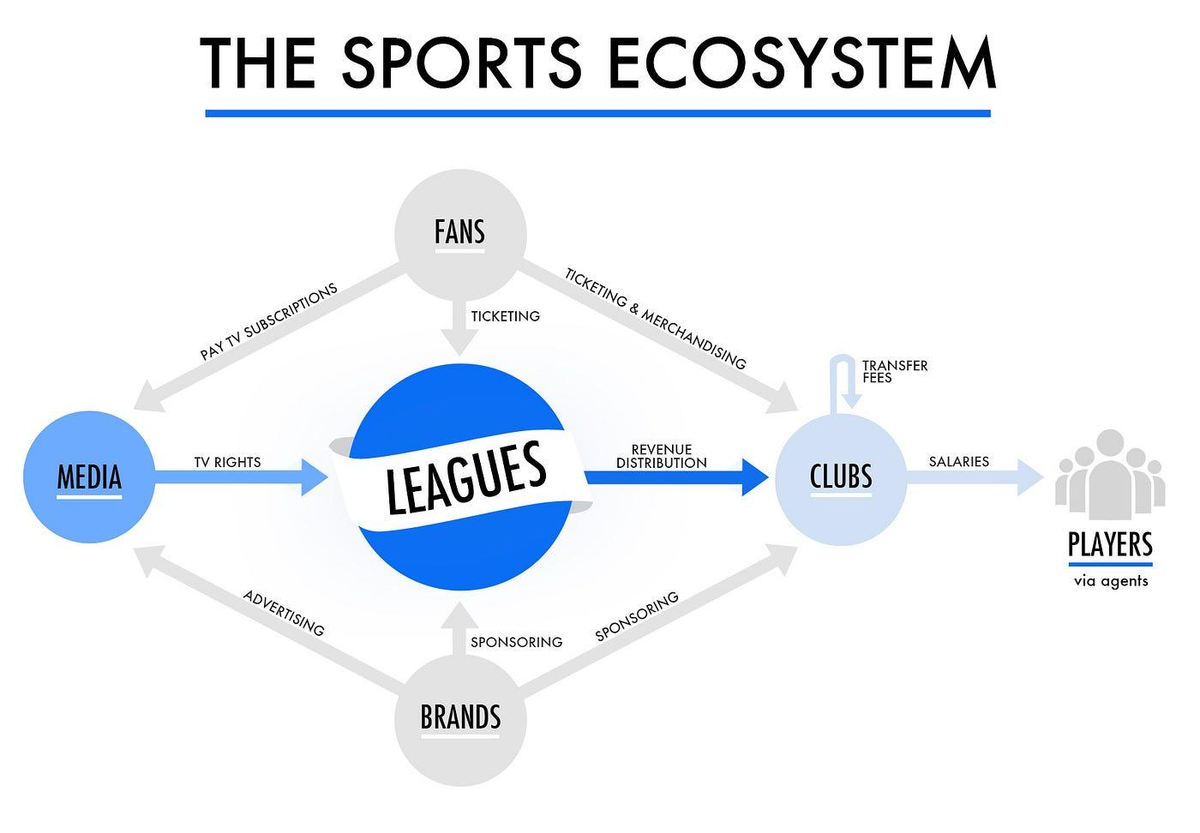
What Is the Sports Industry, really?
As of 2025, the sports industry is valued at $417 billion (Kearney, 2025). But the more interesting question isn't how big that number is; it's what actually counts as "the sports industry" in the first place.
Sport doesn't operate as one single industry the way most people assume. It's an ecosystem of interconnected industries and businesses, each feeding that $417 billion figure in a different way. Understanding the sports industry means understanding who's actually involved, and in what capacity, not just who's on the field.
Who builds sport? Athletes are what fans pay to see, the reason any of this exists commercially. Coaches are responsible for performance, and for managing the relationships that keep a roster functioning. Teams are the organizations that hold both together. But their role extends beyond what happens on the field: they give people something to identify with, rally around, and build a sense of community around.
Who finances sport? Sponsorships fund teams in exchange for visibility and access to their audience. Investors, private equity, and institutional capital fund teams, leagues, and facilities expecting a return. Governments fund infrastructure and events as public policy. Broadcasters pay for the rights to air games, often a league's single largest revenue line. And fans fund all of it directly, through tickets, subscriptions, and merchandise.
Who commercializes sport? Behind every logo on a jersey is a licensing company managing that intellectual property. Behind every jersey sold is a merchandise business. Marketing and sponsorship agencies broker the relationships between brands and teams. Ticketing companies run the infrastructure that turns a stadium seat into revenue. Even hospitality gets pulled in when the FIFA World Cup came to the U.S., FIFA partnered directly with Airbnb to house traveling fans, folding an entirely different industry into the sports economy for a few weeks. Each plays a different role, but they all contribute to the experience that makes people feel connected to a team, a sport, or to each other.
Here's the part worth being honest about: even after mapping all of this out, that $417 billion figure isn't as fixed as it sounds. Depending on which of these categories get counted media rights only, or hospitality and retail too — credible estimates for "the sports industry" range from under $500 billion to well over a trillion dollars. The number moves depending on where you draw the line, not just how the industry performs.
That's not a flaw in the research; it's the actual shape of this industry: too interconnected to fit one clean number. And while the businesses within it may have different commercial objectives, they ultimately contribute to something bigger than revenue: the experiences, connections, and sense of community that make people care about sport in the first place. The more useful next step isn't finding a better number; it's understanding the specific career tracks living inside this ecosystem, which is exactly where we're headed next.
Put It Into Practice: Map the Sports Ecosystem
Choose a sporting event you've watched or attended recently. Your task is to identify the different businesses and organizations that helped make it happen.
Step 1: Choose your event.
Event or competition: ____________________
Step 2: Identify the stakeholders.
Try to identify at least one organization in each category.
Sporting organization: Who organized or operated the event?
Broadcaster or media partner: Who distributed the event or its coverage?
Sponsor or commercial partner: Which brands were involved?
Venue or event services: Who provided the venue, equipment, hospitality, or operational support?
Technology provider: What technology might have supported ticketing, performance, broadcasting, or fan engagement?
Step 3: Connect the dots.
Choose two of the organizations you identified. What did each contribute, and how did their roles connect?
My example: ____________________
What this reveals: A sporting event may look like a single product to a fan, but it depends on a network of organizations working together. Understanding those connections helps you see the wider industry—and the businesses that create career opportunities within it.